
Pest Control That Is Safe for Pets: What to Know
If you share your home, yard, or acreage with pets, pest control has to do two jobs at once: it needs to work, and it needs to protect the animals you love. That is exactly why so many Fargo-Moorhead homeowners, farm families, and business owners look for pest control that is safe for pets without settling for weak results.
The good news is that effective pest control and pet safety are not opposites. The key is using the right products, the right application methods, and the right service plan for your property. At SafeYard Mosquito Control, that means targeted treatments, EPA-approved family- and pet-safe products, and customized service for everything from neighborhood backyards to barns, acreages, commercial properties, and municipal spaces.
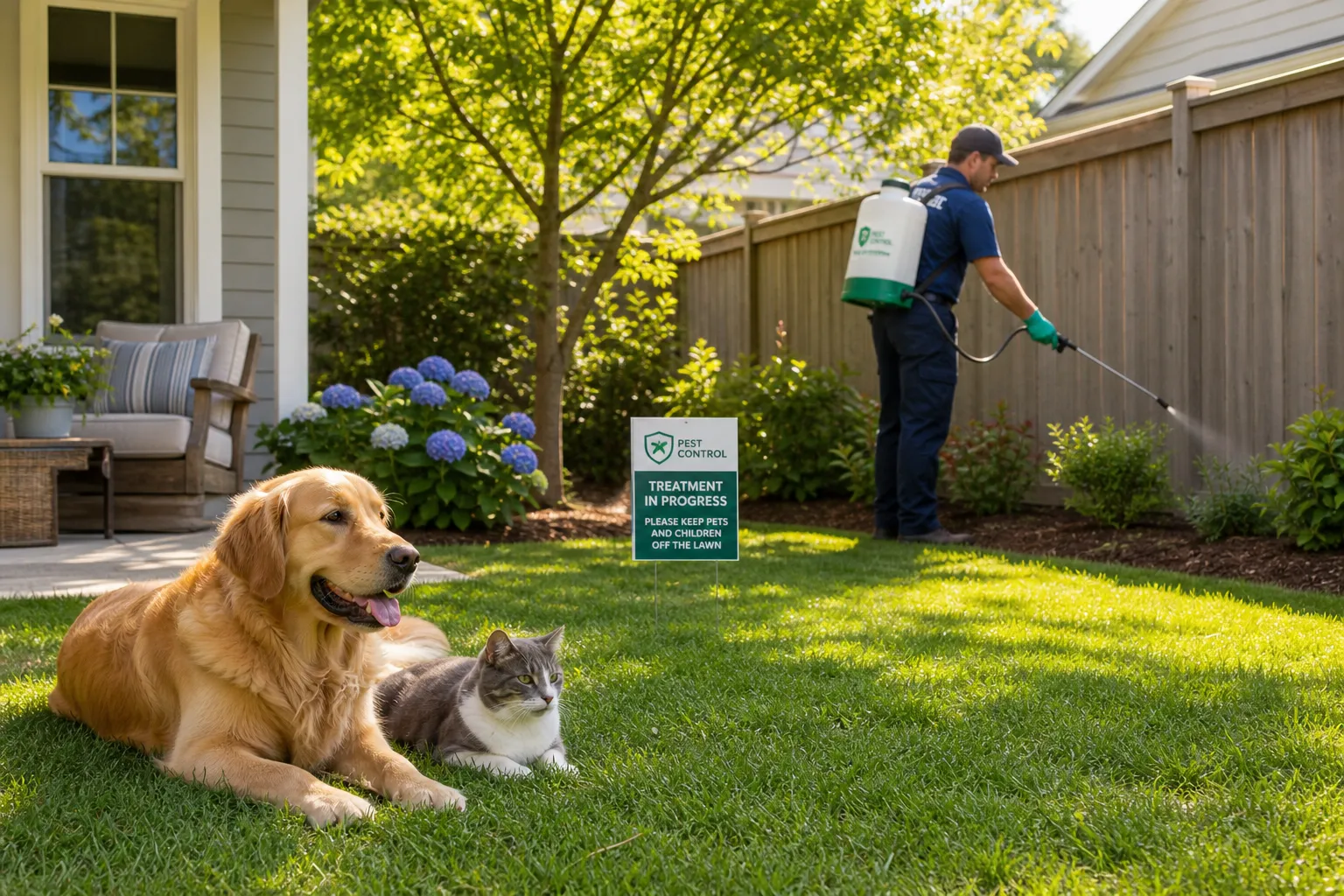
What pet-safe pest control really means
“Pet-safe” does not mean a product can be sprayed freely around animals with no precautions. It means the product and treatment plan are selected and used in a way that reduces risk when directions are followed correctly.
A truly pet-conscious pest control service should consider:
- The type of pest being treated
- Where the treatment is being applied
- Whether pets use that space
- How long pets should stay out of the area
- Whether the product dries, settles, or requires watering in
- Whether there are higher-risk animals involved, such as cats, birds, reptiles, or fish
One of the biggest content gaps in competitor articles is that they often treat “pet safe” like a label claim alone. In reality, the application strategy matters just as much as the product itself.
"Pesticides, while effective in controlling pests, can pose risks to pets if not used properly. Animals may be exposed through inhalation, skin contact, or ingestion." - National Pesticide Information Center
Why the safest approach is not just “less spray”
Many articles focus only on “natural” or “low-toxicity” products. While those can be useful in some situations, the safest and most effective long-term approach is usually Integrated Pest Management, or IPM.
With IPM, a pest professional does not simply spray everything. Instead, the service focuses on inspection, prevention, targeted treatment, and monitoring.
"Integrated Pest Management (IPM) is an environmentally friendly, common-sense approach to controlling pests." - U.S. Environmental Protection Agency
That matters for pets because it helps reduce unnecessary exposure while still solving the pest problem.
How pets are exposed to pest control products
Understanding exposure helps you make better decisions. Pets can come into contact with pesticides in several ways:
Skin contact
Dogs and cats walk, roll, or lie down on treated grass, patios, decks, or floors. Residue on paws and fur can then be licked off later.
Inhalation
This matters most during active application or with aerosols, dusts, and fogging products. Birds and other small animals can be especially sensitive.
Ingestion
This is one of the biggest risks. Pets may chew bait stations, eat granules, lick treated surfaces, or investigate spilled concentrate.
Secondary exposure
On farms, acreages, and larger properties, pets may move between treated and untreated zones. A dog that runs through a perimeter treatment or barn area can track material back indoors.
The treatment types that matter most for pet owners
Not all pest control is equal from a pet-safety standpoint. Some methods are easier to manage around animals than others.
Comparing common pest control options
Treatment type | Pet safety considerations | Best practice |
|---|---|---|
Targeted perimeter spray | Lower risk after drying when properly applied | Keep pets out until dry and as directed |
Mosquito yard treatment | Safe when applied correctly with re-entry guidance followed | Treat when pets are indoors, then allow area to dry |
Granules | Can be attractive to curious pets if not watered in | Follow label directions and restrict access |
Baits | Can be high-risk if accessible | Use secured, tamper-resistant placements only |
Dusts | Can drift and linger | Use very selectively and away from pet areas |
Foggers or bug bombs | Higher exposure risk indoors | Avoid around pets whenever possible |
Mechanical prevention and exclusion | Very low exposure | Use as part of every plan |
What to look for in the best pest control safe for pets
If you are comparing providers, ask specific questions. The best pest control safe for pets is not just about marketing language. It is about process, training, and communication.
Ask whether the company customizes treatments
A good provider should adjust treatment based on:
- Dogs that use the yard daily
- Outdoor cats
- Poultry, barn cats, or farm dogs
- Fish ponds or aquariums
- Livestock areas
- Play spaces shared by kids and pets
SafeYard Mosquito Control serves more than suburban lawns. We build tailored treatment plans for homes, acreages, hobby farms, working farms, businesses, and municipalities across the Fargo-Moorhead region.
Ask what products they use
Look for companies that use EPA-approved products and can explain:
- What pest the product targets
- Where it will be applied
- How long pets should stay away
- What precautions matter after treatment
Ask whether they rely on inspection and prevention
If the only plan is “spray everywhere,” that is a red flag. Pet-safe pest control should include habitat reduction, entry-point control, and targeted application zones.
Ask whether they discuss your pets before service
A professional technician should want to know:
- What animals live on the property
- Whether they roam freely
- Where they eat and sleep
- Whether they have known sensitivities
- Whether there are barns, kennels, or fenced runs
What pet owners in Fargo-Moorhead should think about specifically
Our region brings some unique pest pressure. Mosquitoes, ticks, flies, spiders, and nuisance pests can make it hard to enjoy summer, especially near water, shelterbelts, wooded edges, outbuildings, and livestock areas.
That is why local experience matters. A treatment plan for a South Fargo backyard may be very different from one for a Moorhead property with tree cover, or a rural acreage with barns and fence lines.
SafeYard Mosquito Control has served the region since 2015, combining local expertise with practical, dependable service. As a certified women-owned and locally operated company, we understand how families here actually use their outdoor spaces, and how to protect them without overcomplicating the process.
Common pests that affect pets and properties
A common competitor gap is focusing only on the treatment, not the pest risk itself. In many cases, leaving pests untreated also puts pets at risk.
Mosquitoes
Mosquitoes are more than a nuisance. They reduce comfort in yards and outdoor spaces and can affect both pets and people.
Ticks
Ticks are a major concern for dogs and outdoor animals. They are especially important on wooded properties, acreages, and edges of tall grass.
Fleas
Fleas can move between outdoor areas, pets, and indoor living spaces quickly.
Spiders
Many spiders are only a nuisance, but heavy populations around foundations, sheds, basements, and barns are not something most property owners want to live with.
Flies
Flies are a common frustration around barns, manure areas, livestock spaces, trash areas, and outdoor dining environments for homes and businesses.
Voles and other nuisance pests
Rural and semi-rural properties often need broader protection than a typical yard service provides. That is where tailored perimeter and property-specific pest management becomes especially valuable.
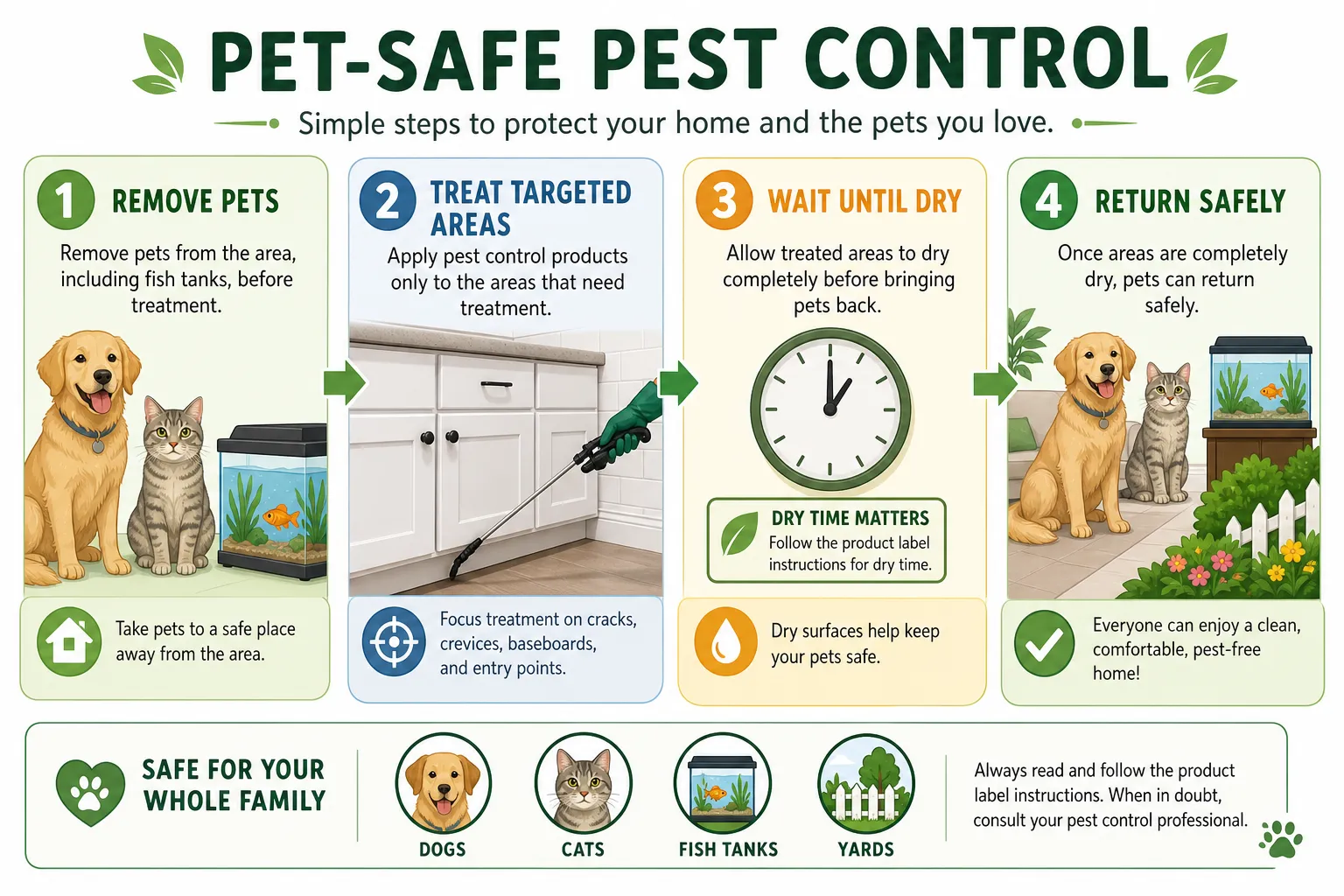
Practical precautions before, during, and after treatment
The safest pest control plan includes good pet-owner habits too.
Before treatment
- Tell your technician exactly what pets are on site
- Remove pet bowls, bedding, toys, and chew items from treatment zones
- Keep pets indoors or in an untreated area
- Ask whether any area needs special handling, such as a dog run, barn aisle, or porch
During treatment
- Do not allow pets to follow the technician
- Keep cats, dogs, birds, and small mammals away from the active treatment zone
- Cover or protect sensitive enclosures if needed
- Make sure gates and doors stay secured
After treatment
- Wait until treated surfaces are fully dry, or longer if the label or technician instructs it
- Prevent licking of treated plants, surfaces, or puddled areas
- Wash paws if a pet accidentally enters too early
- Monitor for unusual symptoms and contact your veterinarian if needed
Are “natural” products always safer for pets?
Not always. This is another area where online advice can be misleading.
Some plant-based or essential-oil-based products may be useful in certain settings, but “natural” does not automatically mean harmless to pets. Cats in particular can be sensitive to certain oils and compounds. A poorly chosen natural product can be more problematic than a properly applied conventional one.
The better question is not, “Is it natural?” The better question is, “Is it appropriate for this pest, this property, and these pets?”
Indoor vs. outdoor pest control for pet owners
SafeYard is known for outdoor pest protection, but many pet owners need to think about the relationship between the yard, the foundation, and the home.
Outdoor areas
Outdoor pet-safe service often focuses on:
- Yard living spaces
- Patio and deck zones
- Foundation lines
- Shrubs and harborage areas
- Barn perimeters
- Outbuildings
- Fence lines and mosquito resting areas
Indoor problem areas
If pests are making their way inside, treatment may also need to address:
- Basements
- Entry points
- Window and door gaps
- Utility penetrations
- Moisture-prone areas
The goal is to stop the cycle, not just chase symptoms from one area to another.
Red flags when choosing a pet-safe pest control company
Be cautious if a provider:
- Makes vague “totally harmless” claims
- Will not explain what products are being used
- Uses bait products where pets can access them
- Cannot explain re-entry timing
- Treats every property exactly the same
A trustworthy provider will be clear, specific, and realistic.
Why tailored service matters more on acreages, farms, and barns
Many articles about pest control that is safe for pets are written only for suburban dog owners. But in the Fargo-Moorhead region, many customers have more complex properties.
Acreages and rural sites may include:
- Farm dogs and barn cats
- Poultry or livestock areas
- Equipment sheds
- Hay and feed storage
- Seasonal standing water
- Windbreaks and tall grass
- Larger mosquito and fly pressure
These properties need more than a one-size-fits-all treatment. SafeYard Mosquito Control offers broader pest protection designed for yards, foundations, barns, homes, and outdoor workspaces so you can improve comfort without compromising daily operations.
How SafeYard Mosquito Control approaches pet-conscious pest service
At SafeYard, our approach is built around real-life use of your property. We know customers want to reclaim their yards, patios, acreage spaces, and barns during the short summer season, not tiptoe around them.
That means we focus on:
- EPA-approved family- and pet-safe products
- Tailored service plans for different property types
- Mosquito control plus broader pest protection
- Local expertise in eastern North Dakota and western Minnesota
- Straightforward guidance before and after treatment
- Dependable service backed by strong five-star Google reviews
Whether you need seasonal mosquito relief at home, perimeter pest control around a business, or targeted service for a farm or acreage, the goal is the same: practical results with safety and trust at the center.
Final thoughts
The safest pest control plan for pet owners is not the one with the flashiest label. It is the one built around the right product, the right placement, the right timing, and the right provider.
If you want pest control that is safe for pets and still effective against mosquitoes, ticks, spiders, flies, voles, and other nuisance pests, SafeYard Mosquito Control offers the kind of local, tailored expertise that makes a real difference. From city yards to rural properties, we help Fargo-Moorhead families and property owners enjoy summer with more comfort and confidence.
If you are ready to protect your yard, foundation, barn, or business without sacrificing peace of mind, SafeYard Mosquito Control is ready to help.
FAQ
What pest control is safe for pets?
Pet-safe pest control usually means targeted treatments using EPA-approved products and careful application methods. The safest option is a provider that considers your pets, the treatment area, and re-entry timing instead of relying on one-size-fits-all spraying.
How long after pest control is it safe for pets?
In many cases, pets can return once the treated area is fully dry, but timing depends on the specific product and application. Always follow the technician’s instructions and the product label if a longer wait is recommended.
Can pets be inside during pest control?
Usually, pets should be kept away from active treatment areas during service. If interior work is being done, it is best to keep them in an untreated room or out of the home until the technician says it is safe to return.
How do you get rid of bugs without harming pets?
The best approach is Integrated Pest Management, which combines inspection, prevention, and targeted treatment. This reduces unnecessary exposure while still controlling mosquitoes, ticks, spiders, flies, and other pests effectively.
Can pets be inside during pest control?
Pets can sometimes stay on the property if they are confined well away from the treatment zone, but they should not be allowed near active applications. For the safest outcome, ask your pest professional for clear indoor and outdoor re-entry guidance.
How do I get rid of bugs in my house without harming pets?
Start with prevention and exclusion, such as sealing entry points, reducing moisture, and removing food sources. If treatment is needed, choose a provider that uses targeted applications, secured baits where appropriate, and pet-specific precautions for your home.